Best Tankless Propane Gas Water Heaters for Home Use
Propane tankless water heaters deliver on-demand hot water with compact design and energy efficiency. This guide highlights five top models ideal for households needing reliable, immediate hot water. From small apartments to busy homes, these units balance performance and efficiency. Compare flow rates, BTU output, and smart features to choose a system that fits your family’s routine while keeping fuel use in check.
| Brand | Model | GPM | BTU | |
|---|---|---|---|---|
| forimo | Propane Tankless Water Heater (4.74 GPM) | 4.74 | 81,888 | 2-3 fixtures |
| Ranein | Indoor Max 3.6 GPM | 3.6 | 80,000 | bath/kitchen |
| Rinnai | RX199iN Condensing | Up to 11.1 | 199,000 | multi-point, large households |
| Ranein | Indoor Max 4.3 GPM | 4.3 | 100,000 | 2 showers + sink |
| APUS | 4.42 GPM Indoor | 4.42 | 95,000 | 2 showers + sink |
forimo Propane Tankless Water Heater (4.74 GPM)

The forimo 4.74 GPM propane tankless heater offers steady temperature control with multiple safety protections, including flame failure, anti-freeze, and overheat protections. It operates at a modest water pressure of 3.6 PSI and can raise temperature up to 167°F. Designed exclusively for LPG, it delivers on-demand hot water for two to three points of use, making it suitable for bathrooms and kitchens in compact spaces.
Efficiency is emphasized through a high-output burner—up to 81,888 BTU/hour—reducing gas usage while maintaining quiet operation. An LED smart digital display facilitates precise temperature adjustments from about 100.4°F to 167°F. The stainless steel construction resists high temperatures and corrosion, and the built-in oxygen-free copper water tank minimizes heat loss for longer service life.
Ranein Indoor Max 3.6 GPM Tankless Water Heater

Ranein’s 3.6 GPM unit provides 80,000 BTU of heating capacity, delivering continuous hot water for two to three supply points such as a bathroom, kitchen, and bar area. The on-demand design eliminates the preheat wait associated with traditional tanks, providing immediate hot water as soon as you open a tap. This model offers versatile modes that tailor temperature and output for different tasks, including dish, fruit, elderly, and infant settings, adding convenience for family use.
Key benefits include consistent hot water without fluctuations and a compact form factor suitable for indoor installation. The unit is built to handle varying household demand and helps reduce standby energy waste. With a focus on dependable performance and user-friendly controls, it supports everyday household needs while maintaining efficient gas use.
Rinnai RX199iN Condensing Tankless Water Heater

Rinnai’s RX199iN is a premium condensing unit capable of delivering up to 11.1 GPM and up to 199,000 BTU. It is installable indoors or outdoors with Versa Vent and supports propane or natural gas through a Smart Sense gas control system. The compact design allows for flexible placement, while the high efficiency (UEF near 0.98) reduces operating costs. Quick Flush and an intuitive control panel simplify maintenance, and the system is designed for multiple fixtures simultaneously, making it ideal for larger homes or busy families.
Ranein Indoor Max 4.3 GPM Tankless Water Heater

This unit provides 100,000 BTU and 4.3 GPM, ensuring continuous hot water for two to three points of use. Notable is the Four Seasons Function which automatically tunes output with seasonal changes, and a Kitchen Function that defaults to 100°F for easier kitchen use. The Bathtub Function lets you adjust output quantity with reminders when the set point is reached, catering to different environments. Like other tankless models, it eliminates waiting for hot water and supports efficient operation for typical family needs.
APUS 4.42 GPM Tankless Water Heater
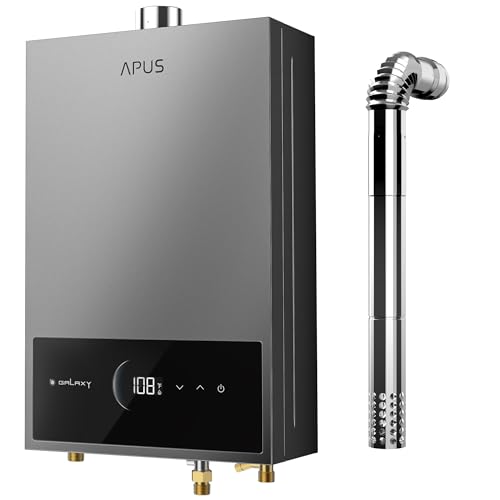
APUS’s 4.42 GPM model delivers strong performance with a 95,000 BTU burner and a smart digital display. It features precise control to keep water temperature within a narrow range, typically ±1°F, which helps prevent sudden changes during peak usage. It uses oxygen-free copper heat exchangers and segmented combustion for high efficiency, claiming substantial energy savings. The unit is designed to satisfy two showers plus a sink simultaneously, maintaining steady temperatures even under heavier demand.
APUS 140,000 BTU Tankless Water Heater With Wi‑Fi
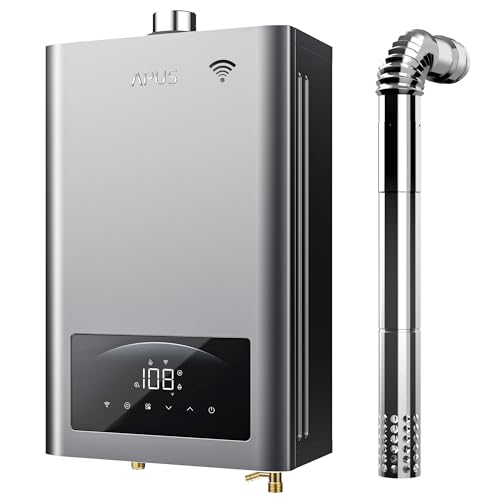
This APUS unit packs a 140,000 BTU burner and up to 6.8 GPM, designed to support two showers and two sinks at once. It features zero cold water technology for instant hot water and a 24/7 ECO smart cycle that reportedly saves energy. A built-in booster pump improves flow by up to 130%, helping ensure a strong hot water supply across multiple fixtures. The smart design aims to deliver rapid, reliable hot water with minimal temperature swings during simultaneous use.
Buying Guide: Key Considerations And Comparisons
- Flow rate (GPM) and household needs: Choose a unit with enough GPM to cover your typical simultaneous use. Larger homes often require higher GPM models like those from Rinnai, while apartments can work with 3-4 GPM units.
- BTU rating and fuel efficiency: Higher BTU means faster heating and better performance under peak demand, but check efficiency (UEF) and venting requirements to avoid waste.
- Indoor vs outdoor installation: Some models are rated for both indoor and outdoor use; ensure proper venting and clearance per manufacturer guidance.
- Propane vs natural gas capability: The selected models here run on propane; if you have natural gas, verify compatibility or consider a dual-fuel capable unit.
- Safety features: Look for flame failure protection, anti-freeze protection, overheating protection, and temperature regulation to prevent shocks during simultaneous use.
- Digital controls and smart features: LED displays, temperature presets, and Wi-Fi controls can simplify operation and monitoring, especially for homes with multiple users.
- Installation and maintenance: Tankless systems require proper venting, gas lines, and periodic flushing to prevent mineral buildup—check service availability in your area and warranty terms.
- Cost and energy considerations: While initial cost varies, tankless propane units typically reduce standby energy loss and can lower utility bills over time when sized correctly for your home.
- Warranty and support: Favor models with solid warranty coverage and accessible customer support in case of component failures or service needs.
- Future-proofing: If you anticipate expanding hot water needs, consider a higher-capacity unit or a solution with modular expansion options to avoid a full replacement later.