Best Fully Adjustable Ergonomic Office Chair for Long Workdays
Finding a chair that adapts to your body and work habits is essential for comfort and productivity. This guide highlights five highly adjustable options designed to support long hours at the desk, with features like customizable lumbar support, multi-position headrests, flip-up arms, and breathable mesh. Each chair is evaluated on adjustability, durability, and overall ergonomic performance to help you choose the right model for your home or office setup.
Summary of Featured Chairs
- CAPOT Ergonomic Mesh Office Chair — Adjustable lumbar support, 4D flip-up arms, 3D headrest, high weight capacity.
- ELABEST X100 Ergonomic Office Chair — 5D flip-up arms, dynamic lumbar support, 3D headrest, built-in footrest.
- Veratric Ergonomic Office Chair — 2D armrests, robust 400 lb capacity, wide seat, breathable mesh.
- COLAMY Ergonomic Mesh Office Chair — 4D flip-up arms, adjustable headrest, lumbar support, tilt lock.
- HOLLUDLE Ergonomic Mesh Office Chair — 3D lumbar and 3D armrests, stylish V-back, tilt lock.
CAPOT Ergonomic Mesh Office Chair

The CAPOT chair is built for long sits, offering micro-adjust lumbar support, flip-up arms, and a flexible headrest to accommodate users from 5’5″ to 6’2″. BIFMA X5.1 certification signals a reliable and durable frame. The chair’s design prioritizes sustained comfort during extended desk work, with a seat that fosters proper posture and reduced fatigue through even weight distribution.
Key adjustments include a lumbar system with eight levels of support and two inches of adjustable depth, aligning with the lumbar spine to lessen pressure and fatigue. A larger cushion made from Aerovith Mesh promotes cooling and breathable support, while the 4D arms can be flipped away for space-saving entry and exit. The chair is calibrated for both comfort and practicality in enterprise or home offices.
ELABEST X100 Ergonomic Office Chair
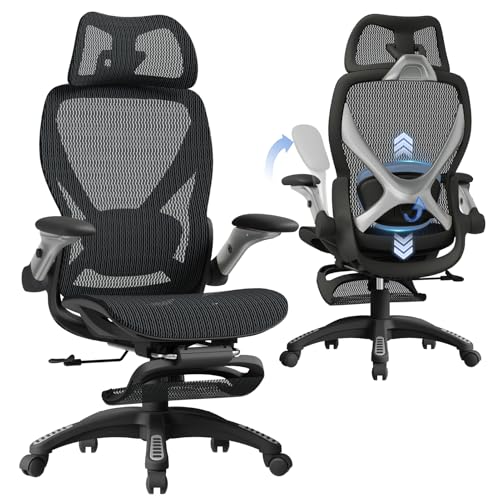
The ELABEST X100 combines a spacious design with a footrest and advanced lumbar support. Its 5D flip-up arms and a 3D headrest create a versatile seating system that adapts to various tasks, from typing to quick breaks. The chair’s dynamic spinal alignment system uses spring-loaded adjustments to mirror natural spine curvature, emphasizing fatigue reduction over long work sessions. A lockable tilt function adds stability when needed, while a space-saving flip-up arm design helps with under-desk clearance.
Veratric Ergonomic Office Chair

The Veratric chair is designed for big and tall users, supporting up to 400 pounds with an extra-wide seat for comfort during long sessions. It offers 2D adjustable armrests and a rocking function with a 90-degree locking option, allowing posture changes throughout the day. A robust frame and durable wheels contribute to stable, smooth mobility, while the lumbar support and headrest help maintain proper alignment during extended computing or gaming tasks.
Marsail Ergonomic Office Chair

Marsail focuses on a combination of 3D armrests, an adjustable 2D headrest, and a breathable mesh back for comfortable airflow. The backrest reclines from 90° to 120°, helping users switch between upright work and relaxed positions. Its lumbar support system adjusts forward/backward and up/down to match individual heights and body shapes, supporting good posture and reducing strain during long hours at the desk. The chair emphasizes airflow, support, and customizable posture options for varied tasks.
COLAMY Ergonomic Mesh Office Chair
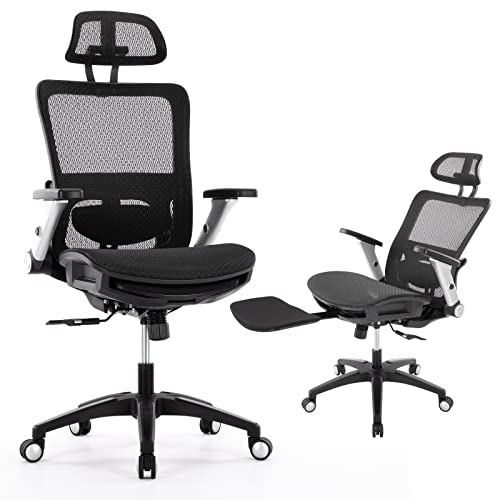
COLAMY combines an adjustable headrest, 4D flip-up arms, and a curved lumbar support with a breathable mesh back. The chair offers a tri-directional tilt lock and wide seat area designed to minimize pressure on the legs while providing substantial support. Build quality and mesh durability are emphasized to withstand daily use. The tilt-lock feature enables users to lock the chair into preferred angles, aiding focus and consistency during long work sessions.
HOLLUDLE Ergonomic Mesh Office Chair

HOLLUDLE offers advanced 3D lumbar support and 3D armrests for full adjustability. The V-shaped back design combines ergonomic support with modern aesthetics. The chair provides a tilt lock at multiple positions and a breathable mesh back to maintain airflow during long work sessions. This model suits users who value precise lumbar control and a contemporary look for a home office or professional setting.
Buying Guide
Adjustability and fit: Prioritize chairs with adjustable lumbar depth, height, and tilt to match your spine’s natural curve. Look for armrests with multiple axes of movement (height, width, and flip capability) to accommodate different desk setups and tasks.
Seat comfort and materials: A wide, cushioned seat with breathable mesh reduces heat and pressure. Waterfall-edge seats can improve leg circulation by reducing pressure behind the knees. Consider seat depth and width to fit your hip measurements and thigh thickness.
Back support and posture: A good ergonomic chair should offer dynamic lumbar support that follows your spine as you move. A headrest is beneficial if you tend to lean back during meetings or reading tasks. A reclining range between 90 and 120 degrees supports varied postures without compromising alignment.
Durability and weight capacity: Check certifications like BIFMA and look at the chair’s frame and wheel quality. Higher weight ratings and robust base construction indicate longer lifespan for frequent use or heavier users.
Practical features: Flip-up arms save space under desks and enable easier entry/exit. Footrests can be a value-add for comfort during breaks or extended tasks. A tilt-lock mechanism helps maintain posture during focused work.
Budget vs. requirements: Balance the level of adjustability with cost. For heavy daily use, prioritize chairs offering multiple adjustment points and durable materials. For lighter or occasional use, a simpler model with essential support may suffice.
Usage scenarios: Consider whether the chair will be used for gaming, coding, design work, or prolonged typing sessions. Some models emphasize airflow and cooling, while others highlight deep lumbar support or heavier-duty construction.