Best 60 Gal Gas Water Heaters and Efficient Tankless Alternatives
The market for household water heating offers a range of choices beyond traditional storage tanks. For larger homes or families that demand abundant hot water, a 60-gallon gas storage model is a common option, while high-capacity gas or tankless units can provide on-demand comfort with space-saving features. This article highlights five relevant products and compares their strengths, performance, and installation considerations to help American homeowners choose the right system.
| Product | Brand | Type | Capacity | Notable Feature |
|---|---|---|---|---|
| FOGATTI Instagas Comfort 170S | FOGATTI Store | Natural Gas Tankless | Up to 7.5 GPM | Compact, precise temperature control |
| FOGATTI Instagas Comfort 180S Outdoor | FOGATTI Store | Natural Gas Tankless | Up to 8.1 GPM | Outdoor installation, durable |
| Rheem 50 Gal. Smart High Efficiency Hybrid | Rheem Store | Hybrid Electric | 50 Gal | Smart features, high efficiency |
| Rheem PROE50 M2 RH95 50-Gallon Electric | Rheem Store | Electric Storage | 50 Gal | Compact footprint |
| Rheem 72-40-2 40 Gallon Electric | Rheem Store | Electric Storage | 40 Gal | R-Foam insulation |
FOGATTI Indoor Gas Tankless 170S

The Instagas Comfort 170S is a natural gas tankless unit designed for indoor installation. It delivers 170,000 BTU and a flow rate up to 7.5 GPM, providing hot water on demand for multiple outlets. Its compact footprint fits tight utility spaces, reducing the need for large storage tanks. The unit emphasizes precise control through water servo technology and temperature sensors, maintaining stable temperatures within ±1℉. A four-stage combustion system supports consistent performance across seasons, making it suitable for households that require dependable, continuous hot water without a storage tank.
FOGATTI Outdoor Gas Tankless 180S

Designed for outdoor installation, this gas tankless model provides up to 180,000 BTU with a maximum flow of 8.1 GPM, suitable for 3–5 outlets in many homes. It includes a remote control panel for indoor operation and a bottom-mounted fan to improve safety, durability, and combustion stability in variable weather. Like other tankless units, it heats water on demand, eliminating standby heat loss associated with traditional storage tanks. Precision temperature control and a four-stage combustion system help maintain consistent comfort, especially in seasons with fluctuating temperatures.
Rheem 50 Gal. Smart High Efficiency Hybrid
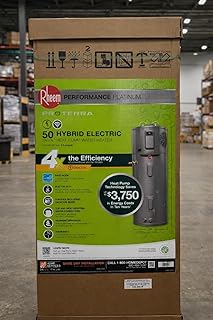
This Rheem hybrid electric water heater combines storage with heat pump technology to boost efficiency. While not a gas unit, its 50-gallon capacity makes it a strong candidate for households that want a larger storage option with reduced energy usage. It’s designed for wired electrical connection and typically requires a dedicated circuit—similar to other high-capacity electric appliances. The system emphasizes automatic thermostat control and corrosion protection via an anode rod, contributing to reliable, long-term hot water supply for moderate-to-large families.
Rheem PROE50 M2 RH95 50-Gallon Electric

Rheem PROE50 M2 RH95 is a 50-gallon electric storage heater designed for reliable home use. It targets households with 3–5 people or multiple bathrooms, offering a compact footprint that can fit in tighter spaces. Automatic thermostat features provide consistent temperature control, while an anode rod helps protect against corrosion. This model suits homes where electrical capacity is available and gas installation is not preferred or feasible.
Rheem 72-40-2 40 Gallon Electric

The 40-gallon electric model from Rheem offers efficient storage with R-Foam insulation and an anode rod for corrosion protection. It is a compact option for smaller households or replacement scenarios where a smaller tank is sufficient. While not a 60-gallon unit, its energy-efficient design and insulation help reduce standby heat loss while providing reliable hot water on demand for everyday needs.
Buying Guide: Key Purchase Considerations
- Fuel type and installation: Gas tankless units provide on-demand hot water with space savings but require proper venting and gas line sizing. Electric storage models need electrical capacity and a dedicated circuit. Consider local codes, home electrical/gas readiness, and professional installation requirements.
- Capacity vs. demand: For households with heavy hot-water usage, a high-flow gas tankless or larger storage tank is beneficial. When choosing, assess peak simultaneous usage (showers, laundry, dishwasher) to determine whether full 60 gallons are needed or a combination of tank and on-demand solutions suffices.
- Efficiency and operating costs: Hybrid electric models improve efficiency by leveraging heat pumps, reducing energy use. Gas tankless units may have higher upfront costs but can lower ongoing energy expenses if hot-water demand is high. Compare ENERGY STAR ratings and expected operating costs.
- Space and installation: Tankless heaters save space but may require more complex venting and gas-line upgrades. Storage tanks occupy more space but offer straightforward installation in most basements or garages. Measure space and consider future remodeling plans.
- Durability and warranty: Look for multi-year warranties on heat exchangers and tanks, plus corrosion protection (anode rods) and pump/valve components. Regular maintenance access and service availability affect long-term reliability.
- Maintenance needs: Tankless systems may require periodic descaling in hard-water areas. Storage tanks require periodic anode rod inspection and flushing to prevent sediment buildup. Consider local water hardness and maintenance capability.
- Cost considerations: While prices vary, balance upfront costs with expected annual energy savings and potential rebates or incentives. If you value low maintenance and space efficiency, tankless or hybrid options may justify higher initial investment.
- Safety and certifications: Ensure units have CSA or UL approvals and proper venting where required. Professional installation ensures safe gas connections and electrical wiring compliant with code.